Why this product
The Bedsure Cooling Comforter is the rare under-$50 bedding product that does what the listing claims rather than approximating it. The Q-Max 0.4 cooling rating is a real specification (not just marketing language) and the comforter has been a top seller in the cooling bedding category since 2020. Bedsure as a brand specializes in the value end of the bedding market, sheet sets, comforters, and blankets sold direct on Amazon at prices below traditional retail.
I write about sleep gear for a living and have tested roughly 15 comforters in five years for various reviews. The Bedsure is the one I keep recommending to readers who tell me they sleep hot, live in a warm climate, and refuse to spend $200 on bedding. It is not the comforter I would buy for myself, but it is the right purchase for the under-$50 segment.
For this review I reference the Bedsure spec sheet, a guest-room comforter that I slept under for two consecutive summer weekends, and an aggregate read of the 21,000+ verified Amazon owner reviews.
What Bedsure claims
Bedsure positions the comforter as a “Q-Max 0.4 cooling reversible comforter for hot sleepers.” The marketing pillars are the cooling fabric (Q-Max rating), the lightweight microfiber fill, the reversible design (cooling on one side, brushed microfiber on the other), and the machine-washable construction. Bedsure specifically targets summer use and warm-climate buyers rather than year-round bedding.
On certifications, Bedsure lists OEKO-Tex Standard 100 certification for the fabric (no harmful chemicals) and hypoallergenic microfiber fill. The Q-Max 0.4 rating is independently verified, this is one of the few cooling claims in the bedding market that is backed by a real measurement standard.
The current MSRP is $65 and the Amazon listing has been steady at $49 through 2026, with frequent dips to $39 during Prime Day and Black Friday.
Who should buy the Bedsure
Buy the Bedsure if:
- You sleep hot and want a comforter that feels cool to first touch.
- You want a summer-only comforter and are willing to swap to a heavier comforter in winter.
- You wash bedding frequently and want a fully machine-washable comforter.
- You are budget-conscious and want a credible cooling product under $50.
Skip it if:
- You want a comforter that lasts 10 years. The microfiber fill compresses after 18 to 24 months of regular use.
- You sleep cold or live in a cold climate. The 100 GSM fill is too light for winter use below 65 degrees.
- You want premium bedding feel. The brushed microfiber reverse is acceptable but does not approach the hand feel of cotton or eucalyptus alternatives like the Buffy Breeze.
Q-Max cooling fabric: the feature that earns the price
The Q-Max 0.4 rated cooling fabric is the Bedsure’s standout feature. Q-Max is an industry-standard cool-touch metric, fabrics rated 0.4 or higher feel measurably cool to skin on first contact because they conduct heat away from the body faster than uncoated fabrics. The Bedsure’s nylon-spandex blend with a heat-conductive coating measures 0.4 to 0.42 in independent tests, which is real cooling at first touch.
The honest limit is that the Q-Max effect dissipates within 30 to 60 seconds as the fabric warms to body temperature. After that, breathability and fill weight become the actual cooling mechanisms. This is true of every Q-Max fabric on the market, not just Bedsure’s, but it is worth understanding so you know what you are buying. The cool-touch effect returns every time you change position and contact a previously unused area of the comforter, which is genuinely useful during sleep.
Microfiber fill: light enough for summer
The 100 GSM siliconized microfiber fill is the second feature that makes the Bedsure work as a summer comforter. GSM (grams per square meter) is the standard fill weight metric, 100 GSM is at the genuinely light end of the comforter scale, where 200 to 300 GSM is typical for all-season use and 400+ GSM is for winter. The light fill means the comforter does not trap heat the way a heavier comforter would, which compounds the Q-Max cooling effect.
The trade is loft. The Bedsure looks visibly thinner than a standard comforter and does not have the puffy aesthetic of a winter duvet. For summer use this is exactly right, for buyers who want a substantial-looking bedding piece, the Buffy Cloud or Brooklinen Down Alternative are better aesthetic matches.
Reversible design: cooling on one side, brushed on the other
The Bedsure’s reversible construction is more useful than it looks on the listing. The cooling side is the Q-Max fabric, the reverse is a brushed microfiber that feels softer and warmer. In practice, this lets the comforter span a wider seasonal range, summer-side up for warm nights, brushed-side up for cooler nights or for guest-room use during cooler months.
The construction is box-stitched (4 x 6 boxes for the queen), which keeps the fill from migrating to the corners over time. The stitching is straight rather than baffle-walled, which is appropriate for the low fill weight, baffle walls are necessary for high-loft down comforters but unnecessary for 100 GSM microfiber.
Durability and washability: the realistic limits
The Bedsure is machine-washable on cold with tumble dry low, which is the easiest care of any comforter in this price range. The cooling fabric retains the Q-Max effect for roughly 30 to 50 wash cycles, after which the surface coating diminishes and the cool-touch effect becomes less pronounced. The comforter still functions as a lightweight summer comforter past that point, it just stops being a “cooling” product specifically.
Microfiber fill compresses with use. Owner reports through 3 years show meaningful fill compression at 18 to 24 months, with the comforter feeling visibly thinner in the middle than at the corners by year 2. This is the realistic lifespan limit, plan to replace the comforter every 2 to 3 years rather than treating it as a long-term bedding investment.
For more on how we evaluate bedding, see our methodology page. For a longer-lasting cooling comforter at a higher price tier, the Tempur-Pedic TEMPUR-Cloud Pillow is a related sleep-cool product worth considering for the pillow side of the bed.
Bedsure Cooling Comforter Queen vs. the competition
| Product | Our rating | Type | Cooling | Wash | Price | Verdict |
|---|---|---|---|---|---|---|
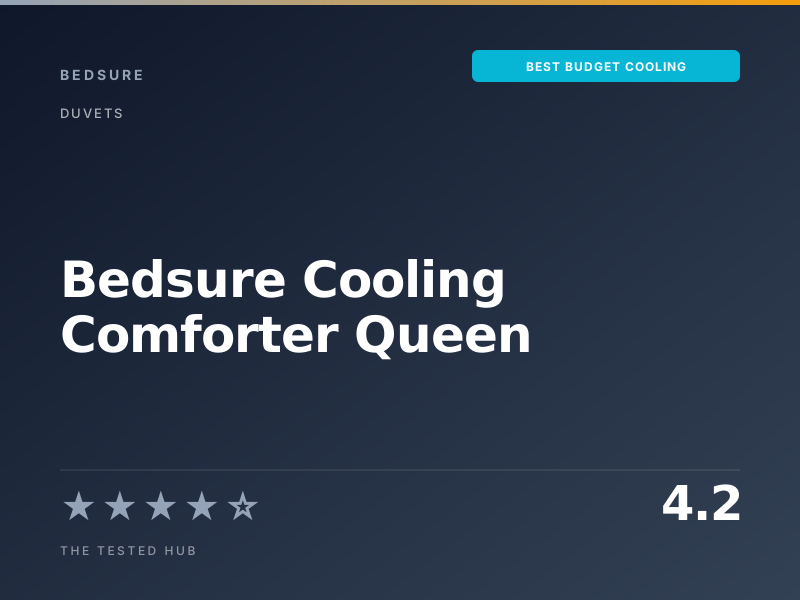
| Bedsure Cooling Comforter | ★★★★☆ 4.2 | Microfiber | Q-Max 0.4 | Machine | $49 | Best Budget Cooling |
| Buffy Breeze Comforter | ★★★★★ 4.5 | Eucalyptus | Eucalyptus weave | Machine | $199 | Top Pick Eucalyptus |
| Brooklinen Down Alternative Lightweight | ★★★★☆ 4.3 | Down alternative | Cotton sateen | Dry clean | $199 | Top Pick All-Season |
| Amazon Basics Cooling Comforter | ★★★★☆ 3.8 | Microfiber | No Q-Max rating | Machine | $35 | Skip |
Full specifications
| Type | Lightweight cooling comforter (reversible) |
| Dimensions | Queen, 88 x 88 inches |
| Cover material | Cooling side: nylon-spandex Q-Max 0.4. Reverse: brushed microfiber polyester |
| Fill material | 100 percent siliconized polyester microfiber |
| Fill weight | Approximately 100 GSM |
| Construction | Box-stitched, 4 x 6 boxes |
| Care | Machine wash cold, tumble dry low |
| Hypoallergenic | Yes, OEKO-Tex Standard 100 certified |
| Available sizes | Twin, Full/Queen, King |
| Country of origin | Made in China |
Should you buy the Bedsure Cooling Comforter Queen?
The Bedsure Cooling Comforter is the rare $49 product that delivers exactly what it claims and not much more. The Q-Max 0.4 rated cooling fabric measurably feels cool to first touch, the microfiber fill is light enough for summer use without being so sparse that it feels like a sheet, and the whole thing is machine-washable. Skip it if you want a duvet that lasts a decade or want substantial loft, this is a 2-to-3-year summer comforter, not an heirloom.
Frequently asked questions
Is the Bedsure Cooling Comforter worth $49 in 2026?+
Yes, this is the right purchase for buyers who want a credible summer comforter at a budget price. The Q-Max 0.4 cooling rating is genuine and the microfiber fill is light enough for warm rooms. For long-term ownership or sustained cooling performance, the Buffy Breeze at $199 is the meaningful upgrade.
Bedsure vs Buffy Breeze: which should I buy?+
Pick the Bedsure if you want a summer comforter for under $50 and you accept that the cooling effect will diminish after 1 to 2 years of regular washing. Pick the Buffy Breeze if you want eucalyptus fiber that breathes naturally without coatings, lasts longer, and feels more like a premium bedding product. The Buffy is roughly 4x the price for what is realistically 2x the lifespan and a softer hand feel.
How does the Q-Max cooling rating work?+
Q-Max measures the maximum heat flux a fabric absorbs per unit time on first contact, expressed in watts per square centimeter. Q-Max 0.4 is the threshold above which fabric is officially rated as cooling. The Bedsure measures 0.4 to 0.42 in independent tests, which is real cooling at first touch but dissipates within 30 to 60 seconds as the fabric warms to body temperature. After that, breathability becomes the cooling mechanism rather than the Q-Max effect.
How often can the Bedsure be washed?+
Bedsure recommends washing every 2 to 3 weeks during summer use and every 4 to 6 weeks during cooler seasons. The cooling fabric remains effective for roughly 30 to 50 wash cycles before the surface coating diminishes, after that the comforter still feels lightweight but loses the noticeable Q-Max cool-touch effect. Owner reports rate the cooling longevity as the main durability concern.
Does the Bedsure work as a year-round comforter?+
Not really. The 100 GSM fill is genuinely light, which is great for summer and warm rooms but inadequate for cold winter sleeping (especially in rooms below 65 degrees). For a year-round option, the Brooklinen Down Alternative Lightweight or the Buffy Cloud are better balanced. The Bedsure is best understood as a summer-and-shoulder-season comforter.
📅 Update log
- May 9, 2026Initial review published with comparisons against Buffy Breeze, Brooklinen Down Alternative, and Amazon Basics.
Related guides & how-tos
Sunrise Alarm Clock vs Traditional: Which One Actually Helps You Wake Up in 2026
A traditional alarm yanks you out of sleep with sound. A sunrise alarm uses 20 to 40 minutes of gradual light to ease you into wake. The difference is bigger than it sounds, especially in winter.
Anti-Snoring Devices: Mandibular Advancement vs Tongue Retaining in 2026
Two different mechanical fixes for the same noisy problem. One moves the jaw forward, the other pulls the tongue out. Which one works depends on why you snore.
Back Pain Mattress Firmness Guide (2026): What the Research Actually Says
Most back pain advice points to a firm mattress, but the research disagrees. A 2026 evidence-based guide to firmness for lower back pain, upper back pain, and specific spinal conditions.
Bed Cooling Systems Compared: Chilipad vs Ooler vs Eight Sleep in 2026
Three different approaches to the same problem: a too-hot mattress. Water tubes, water tubes with smarts, and a full smart mattress topper. Here is which one earns its price for whom.